
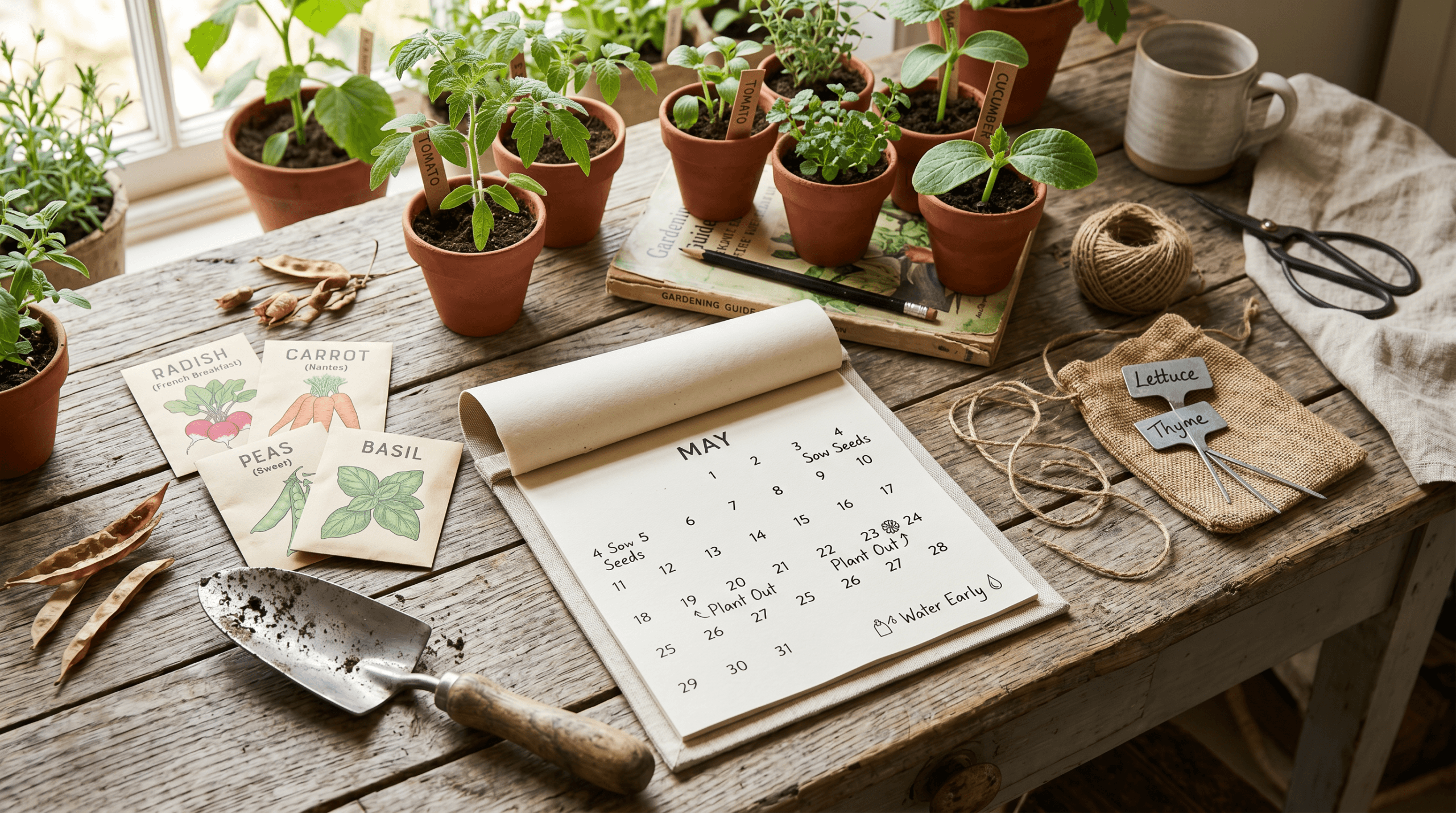
Knowing what to grow is only half the equation. Knowing when to grow it — based on your zone and local frost dates — is what separates a mediocre garden from a great one. This calendar covers the continental US, with notes for different zones. Find your zone first at planthardiness.ars.usda.gov.
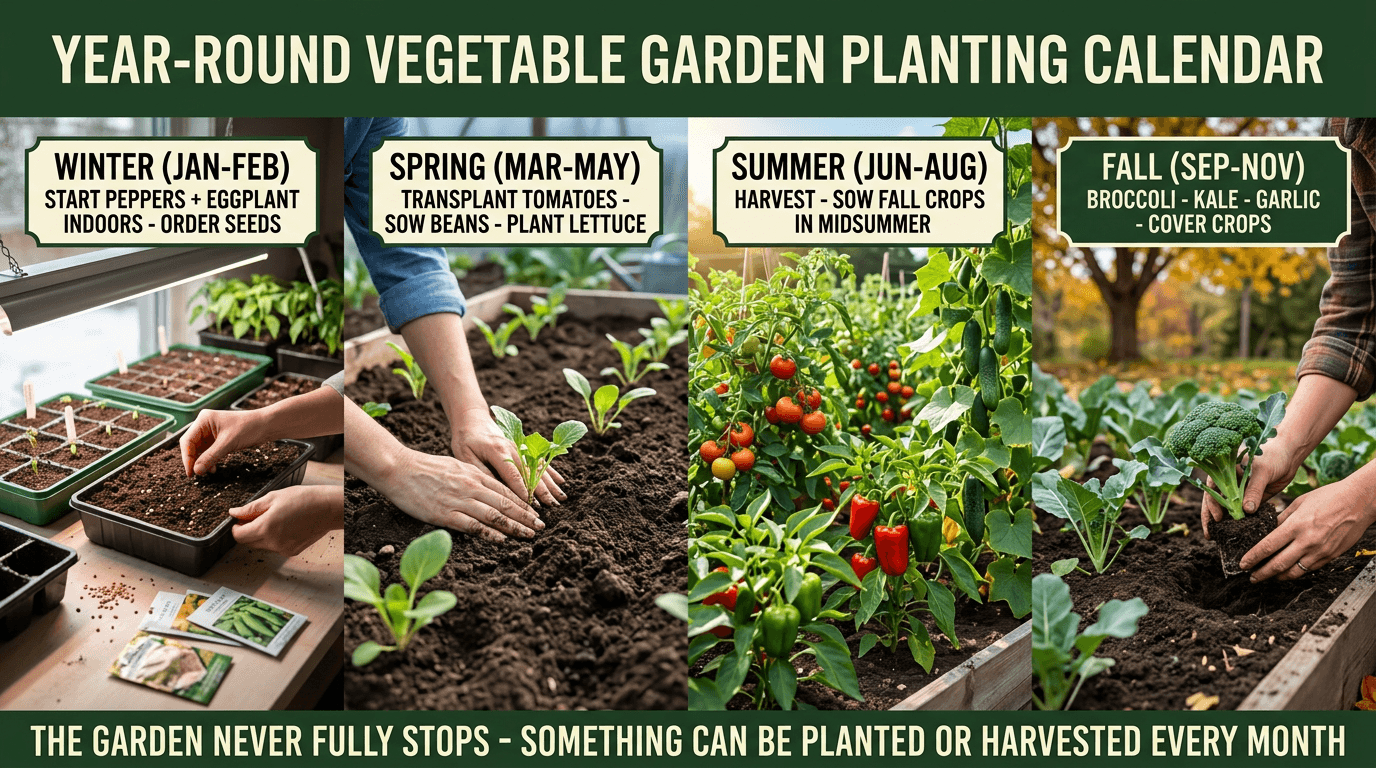
January
- Zones 9–10: Plant cool-season crops directly outdoors: lettuce, spinach, kale, beets, carrots, peas, broccoli, cabbage.
- Zones 7–8: Start broccoli and cabbage seeds indoors. Plan your garden on paper.
- Zones 3–6: Seed catalog season. Order seeds. Dream and plan.
February
- Zones 9–10: Direct sow warm-season crops late in the month: beans, squash, cucumbers. Continue cool-season planting.
- Zones 7–8: Start tomato, pepper, and eggplant seeds indoors (8–10 weeks before last frost). Direct sow peas, spinach, and lettuce outdoors.
- Zones 5–6: Start onions and leeks indoors.
- Zones 3–4: Still planning. Browse seed catalogs.
March
- Zones 9–10: Transition to warm-season crops. Plant tomato and pepper transplants.
- Zones 7–8: Plant potatoes. Direct sow beets, carrots, chard. Plant peas.
- Zones 5–6: Start tomatoes, peppers, and eggplant indoors. Direct sow cold-hardy greens under row cover.
- Zones 3–4: Start tomatoes and peppers indoors.
April
- Zones 9–10: Plant melons, sweet corn, sweet potatoes.
- Zones 7–8: Plant tomato and pepper transplants after last frost. Direct sow beans, squash, cucumbers late in the month.
- Zones 5–6: After last frost: transplant cool-season starts. Direct sow beets, carrots, chard. Start squash and cucumbers indoors.
- Zones 3–4: Plant cool-season crops outdoors (spinach, peas, kale). Continue starting warm-season crops indoors.
May
The big planting month for most of the US.
- Zones 7–10: All warm-season crops in full swing. Plant sweet potatoes, okra, melons.
- Zones 5–6: Last frost typically passes. Transplant tomatoes, peppers, and eggplant. Direct sow beans, cucumbers, squash, corn.
- Zones 3–4: After your last frost date (often late May): transplant tomatoes and peppers. Direct sow warm-season crops.
June
- Zones 3–6: Peak planting continues. Succession-sow beans, lettuce, and radishes. Side-dress heavy feeders with fertilizer.
- Zones 7–8: Harvest spring crops. Plant heat-tolerant varieties (okra, sweet potatoes, southern peas).
- Zones 9–10: Start of the summer slowdown — too hot for most crops. Focus on heat-lovers: okra, sweet potatoes, hot peppers.
July
- Zones 3–6: Midsummer harvest. Succession-sow fast crops. Start fall brassicas indoors in mid-July.
- Zones 7–8: Start fall garden planning. Sow fall broccoli, cauliflower, and kale indoors.
- Zones 9–10: Rest period for most crops. Focus on watering and maintaining heat-lovers.
August
- Zones 5–6: Plant fall crops — kale, spinach, lettuce, radishes, beets, carrots. Time these to mature before your first fall frost.
- Zones 7–8: Major fall planting month. Direct sow all cool-season crops. Transplant broccoli and cauliflower.
- Zones 9–10: Begin planting cool-season crops as temperatures moderate.
September
- Zones 5–6: Last chance for fast-maturing fall crops (radishes, lettuce, spinach). Harvest and preserve summer crops.
- Zones 7–8: Full fall garden in swing. Plant garlic for spring harvest. Continue direct sowing greens.
- Zones 9–10: Prime cool-season planting. Tomatoes, peppers, beans can still go in.
October
- All zones: Plant garlic (Zones 4–8 October–November for spring harvest).
- Zones 7–10: Active fall/winter gardening. Plant brassicas, root vegetables, greens.
- Zones 3–6: Garden winding down. Harvest, clean up, add compost to beds for next year.
November
- Zones 8–10: Winter gardening in full swing. Plant peas in Zone 9–10.
- Zones 3–7: Garden dormant. Great time to build or repair raised beds and order seeds.
December
- Zones 9–10: Direct sow cool-season crops. Garden year-round.
- Zones 7–8: Cold frames and row covers extend the harvest. Harvest hardy greens through mild winters.
- Zones 3–6: Order seeds for next year. Rest. Read gardening books.
How to Use This Calendar
This is a general guide — your specific last and first frost dates are the most important numbers. Always calculate backwards from your frost dates for precise timing. Use almanac.com/gardening/frostdates and enter your ZIP code.


