
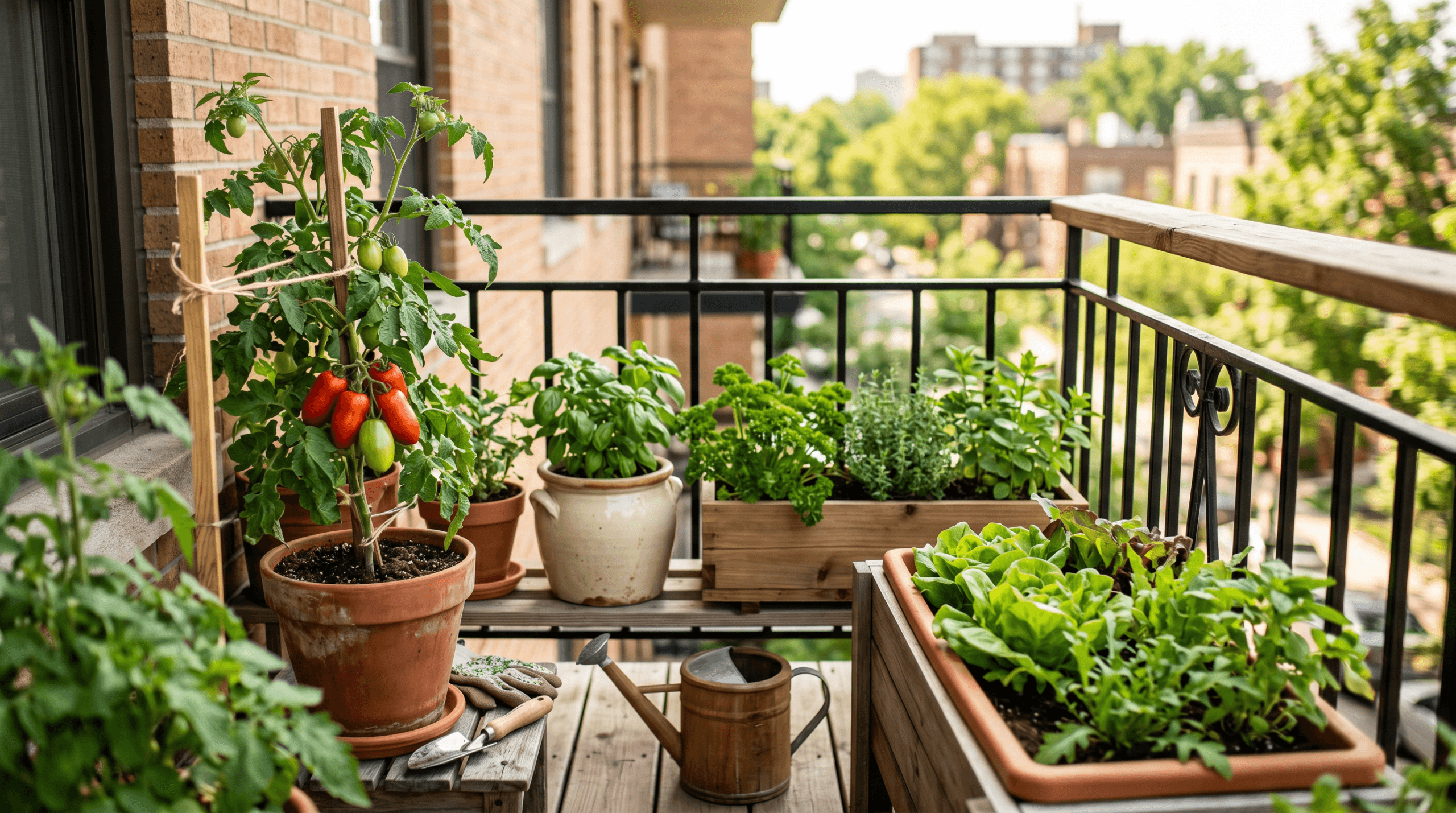
A balcony, patio, or even a sunny windowsill can produce a surprising amount of food. You don’t need a yard — you need sunlight, the right containers, and a few smart plant choices. Here’s how to make it work.
First: Assess Your Sunlight
This is the most important factor in container gardening. Stand on your balcony at different times of day and honestly count the hours of direct sun.
- 6+ hours: You can grow most vegetables — tomatoes, peppers, cucumbers, beans
- 4–6 hours: Stick to leafy greens, herbs, radishes, peas
- Under 4 hours: Herbs and microgreens only
No amount of fertilizer or fancy soil compensates for lack of light.
What Size Containers Do You Need?
| Plant | Minimum Container Size |
|---|---|
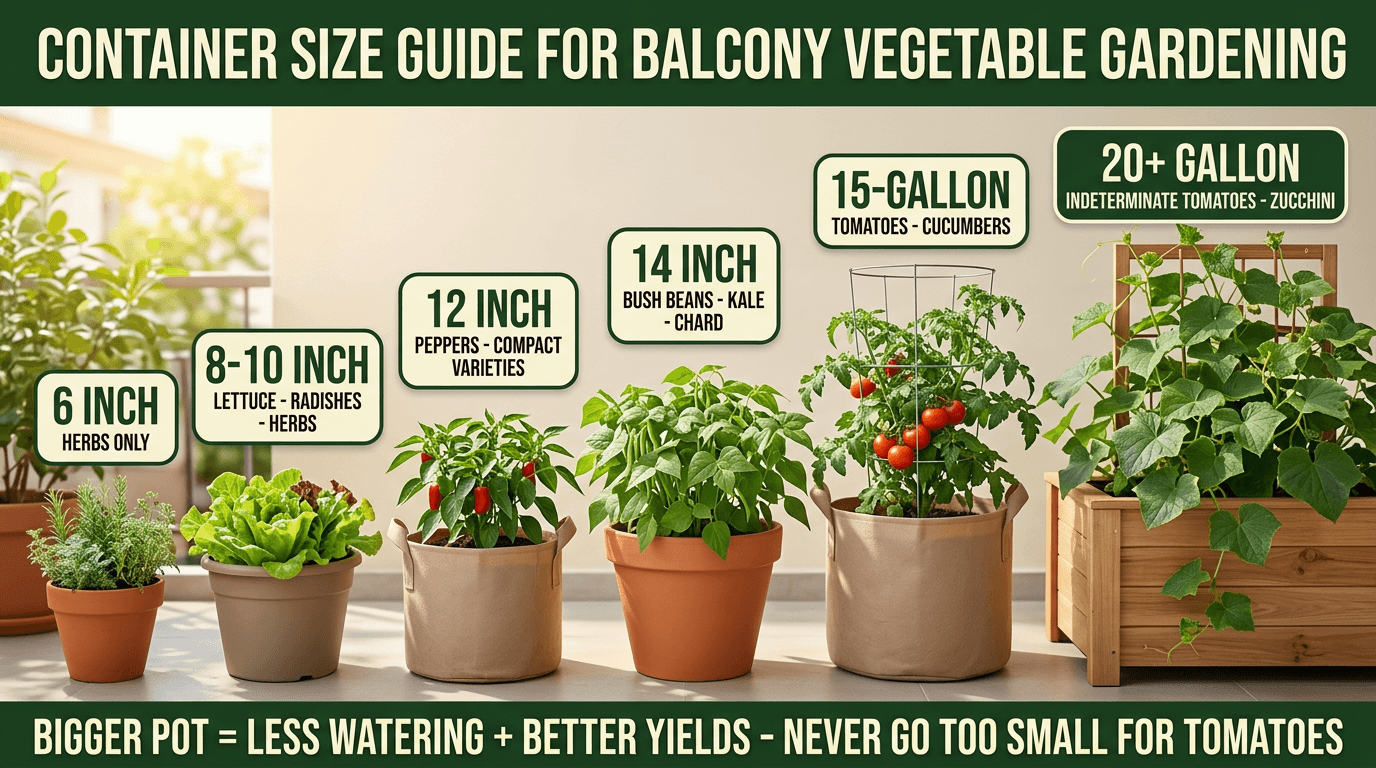
| Lettuce, herbs, radishes | 6–8 inch pot or window box |
| Spinach, kale, chard | 8–12 inch pot |
| Bush beans, peas | 12-inch pot, 12 inches deep |
| Cucumbers, bush zucchini | 5-gallon pot (at least) |
| Tomatoes (determinate/bush) | 5-gallon minimum; 10-gallon preferred |
| Peppers | 5-gallon |
| Strawberries | 6-inch pot per plant, or hanging basket |
When in doubt, go bigger. Small containers dry out fast and stress plants.
Best Soil for Containers
Never use garden soil in containers — it compacts, drains poorly, and often contains pests and diseases. Use a quality potting mix (not “potting soil” — read the label). Add 20–25% perlite for drainage. A slow-release fertilizer mixed in at planting keeps plants fed for the first 2–3 months.
Watering — The Biggest Challenge
Containers dry out fast — on a hot summer day, a 5-gallon pot can dry out completely. Check your containers daily in summer. Signs your container needs water: soil pulls away from the edges, leaves look slightly droopy in the morning. Self-watering containers are worth the extra cost for balcony gardening — they have a reservoir at the bottom and reduce watering frequency significantly.
Weight — An Important Consideration
Soil is heavy. A 5-gallon container of wet potting mix weighs 50+ pounds. Before setting up a large container garden:
- Check your building’s balcony weight limit (usually listed in your lease or building management office)
- Distribute weight toward the structural walls/edges, not the middle of the balcony
- Use lightweight containers (fabric grow bags or plastic) instead of terracotta or ceramic
- Use lightweight potting mix — some brands are specifically formulated to be lighter
Best Plants for Balcony Growing
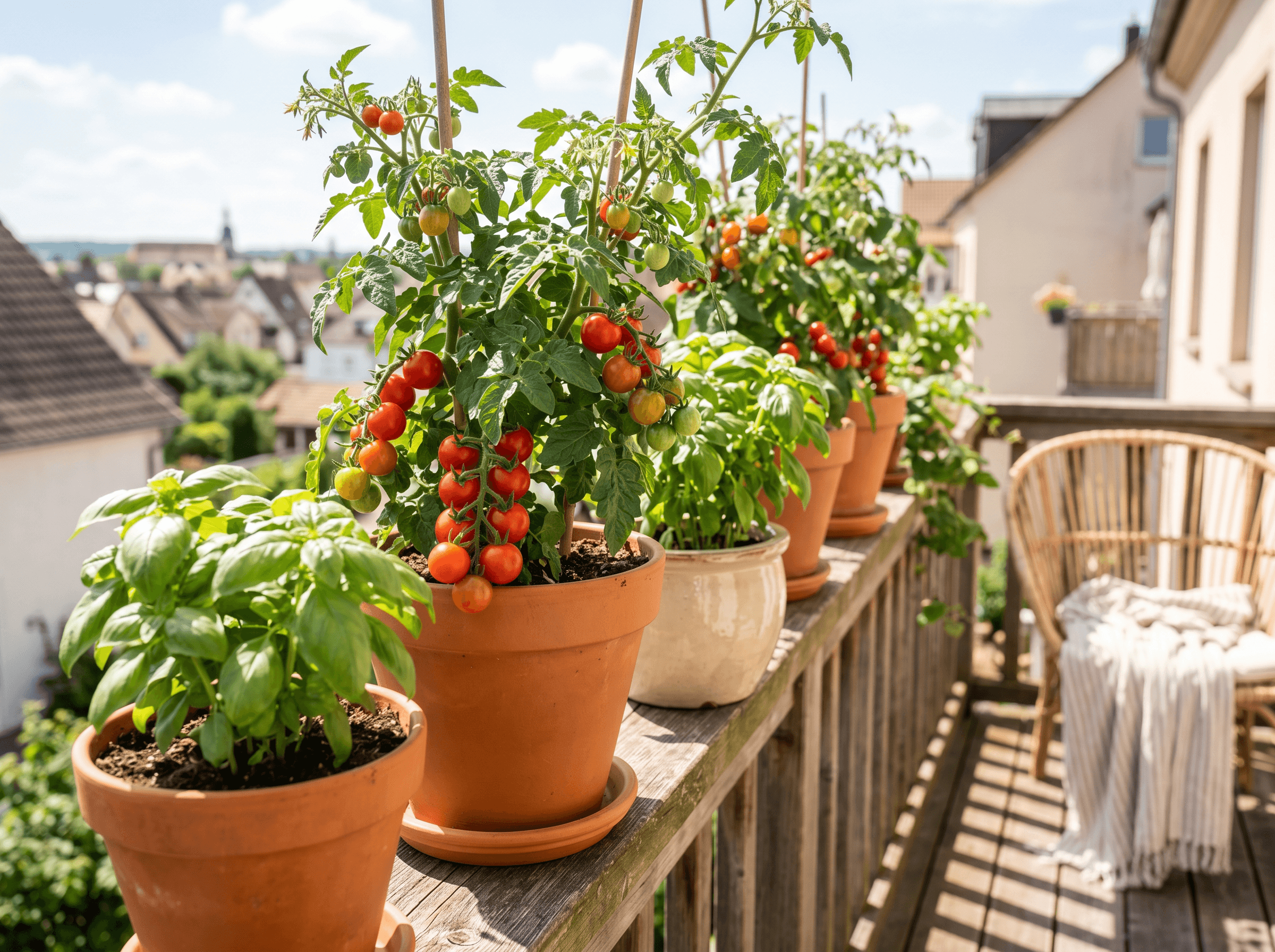
- Cherry tomatoes (‘Tumbling Tom’, ‘Tiny Tim’, ‘Patio’)
- Lettuce & salad mix (cut-and-come-again)
- Herbs: basil, chives, mint (keep mint in its own pot — it spreads), parsley
- Strawberries (hanging baskets or strawberry pots)
- Peppers (love heat, perfect for sunny south-facing balconies)
- Kale and Swiss chard
- Bush cucumbers (‘Patio Snacker’, ‘Bush Pickle’)
- Radishes (fastest crop you can grow)
- Green onions / scallions
Managing Wind
High balconies can have strong winds that damage plants and dry out soil even faster. Solutions:
- Place taller plants in corners or against walls as windbreaks
- Use heavier containers for tall plants
- A simple mesh windbreak panel on the railing helps significantly
Feeding Container Plants
Because you water frequently, nutrients wash out of containers faster than in-ground beds. Feed every 2 weeks with a liquid fertilizer once plants are established and growing actively.
Making the Most of a Small Space
- Vertical growing: A trellis against a wall or railing lets cucumbers, beans, and small melons grow up instead of out
- Window boxes: Great for herbs and lettuce along railings
- Tiered plant stands: Double or triple your growing space
- Succession sowing: Sow fast crops (radishes, lettuce) every 2–3 weeks
Even a single 10-gallon container of cherry tomatoes, properly managed, can produce 20–30+ pounds of fruit in a season.